
-
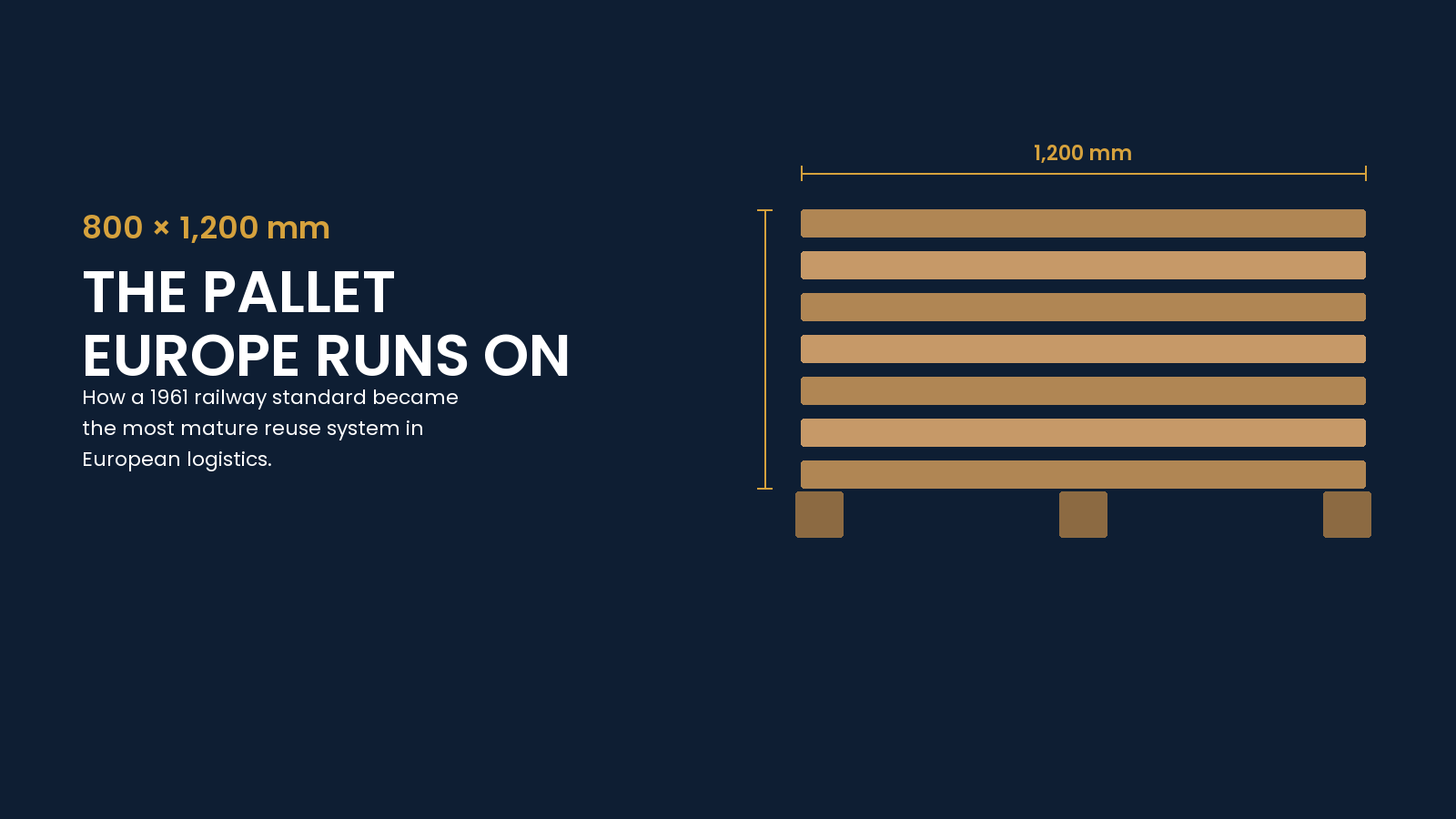
The Pallet Europe Runs On
It is 800 by 1,200 millimetres, built from eleven boards, nine blocks and 78 nails. What makes the Euro pallet worth explaining is not the wood, but the system of standardisation, exchange and repair…
-

The Rhine at record low: why the date matters more than the depth
The Kaub gauge has fallen to 21 centimetres, the lowest since 1880. The record matters less than its timing: in 2018 the same depth was not reached until late October. What a constrained Rhine…
-

Why under-packaging is the costlier environmental mistake
In food, the worst packaging isn’t excess — it’s packaging that fails to protect. Most of a food’s carbon footprint is the food itself, so a pack that lets it spoil wastes far more…
-

The mono-material myth: why “single material” does not mean “recyclable”
“Mono-material equals recyclable” is a myth. Single-material packaging is often not recycled, and “composite” is a legal category, not a recyclability verdict. What actually decides it.
-

The circular bioeconomy: why circularity and the bioeconomy need each other
Circular economy and bioeconomy solve different halves of the same problem. Why their intersection, the circular bioeconomy, matters, and the business case for it.
-

Aseptic packaging: the food is sterilised before it ever reaches the carton
What aseptic packaging is, how liquid packaging cartons keep food shelf-stable for months without refrigeration, and why it matters where cold chains are weak.
-

Bio-based, biodegradable, compostable: three terms that are not interchangeable
Bio-based describes where a material comes from. Biodegradable describes what can happen to it. Compostable describes what has been verified to happen, under defined conditions. An explanation of the distinctions, the misconceptions they generate,…
Related: Policy & Regulation · Research & Publications