
The complete archive of analysis, briefings and research across all areas, most recent first.
-

Aseptic packaging: the food is sterilised before it ever reaches the carton
What aseptic packaging is, how liquid packaging cartons keep food shelf-stable for months without refrigeration, and why it matters where cold chains are weak.
-

Composite packaging under the PPWR: a legal boundary, not a scientific one
The PPWR defines composite packaging for the first time at EU level, ending divergent national interpretations. It sorts packaging into material categories, but it is not a recyclability…
-
Total fluorine: a pragmatic PFAS screen that cannot tell you what it found
Total fluorine measures every fluorine atom in a sample, organic or inorganic. It is fast, cheap and captures unknown PFAS, but minerals, fillers and groundwater all contain fluoride,…
-

What PFAS actually are: one definition, thousands of substances
PFAS is not a substance or a class of similar substances but a structural definition covering roughly 10,000 chemicals. What the carbon–fluorine bond does, why the families behave…
-

Hemicellulose latex coatings: an excellent oxygen barrier, with one condition
Hemicellulose forms films with excellent oxygen barrier performance because its hydroxyl groups hydrogen-bond into a dense network. The same groups bond to water, which is why the barrier…
-

Can paper block electromagnetic interference? Only if you stop it reflecting
Every powered device emits electromagnetic energy and is vulnerable to it, and shielding is a regulatory requirement. Cellulose shields nothing on its own, but its porosity enables absorption-dominant…
-

Bark-based polyurethane foams: the hydroxyl groups are on the wrong backbone
Bark is rich in hydroxyl groups, which is exactly what a polyurethane polyol needs. The difficulty is that they sit on rigid aromatic rings, and almost every route…
-

The EU ban on destroying unsold textiles: what applies from 19 July 2026
From 19 July 2026, large companies may no longer destroy unsold apparel, clothing accessories or footwear in the EU. What Article 25 of the ESPR requires, who is…
-

Latex is not a raw material: it is a defence system
Latex is stored under pressure throughout the plant and released by injury itself, coagulating within minutes to seal the wound and trap insects. Reading it as defence rather…
-
How mussels glue underwater, and why adhesives engineers keep studying them
Water defeats most adhesives. Mussels bond to wet rock in seconds using a single modified amino acid that both binds surfaces and cross-links protein, provided the chemistry is…
-
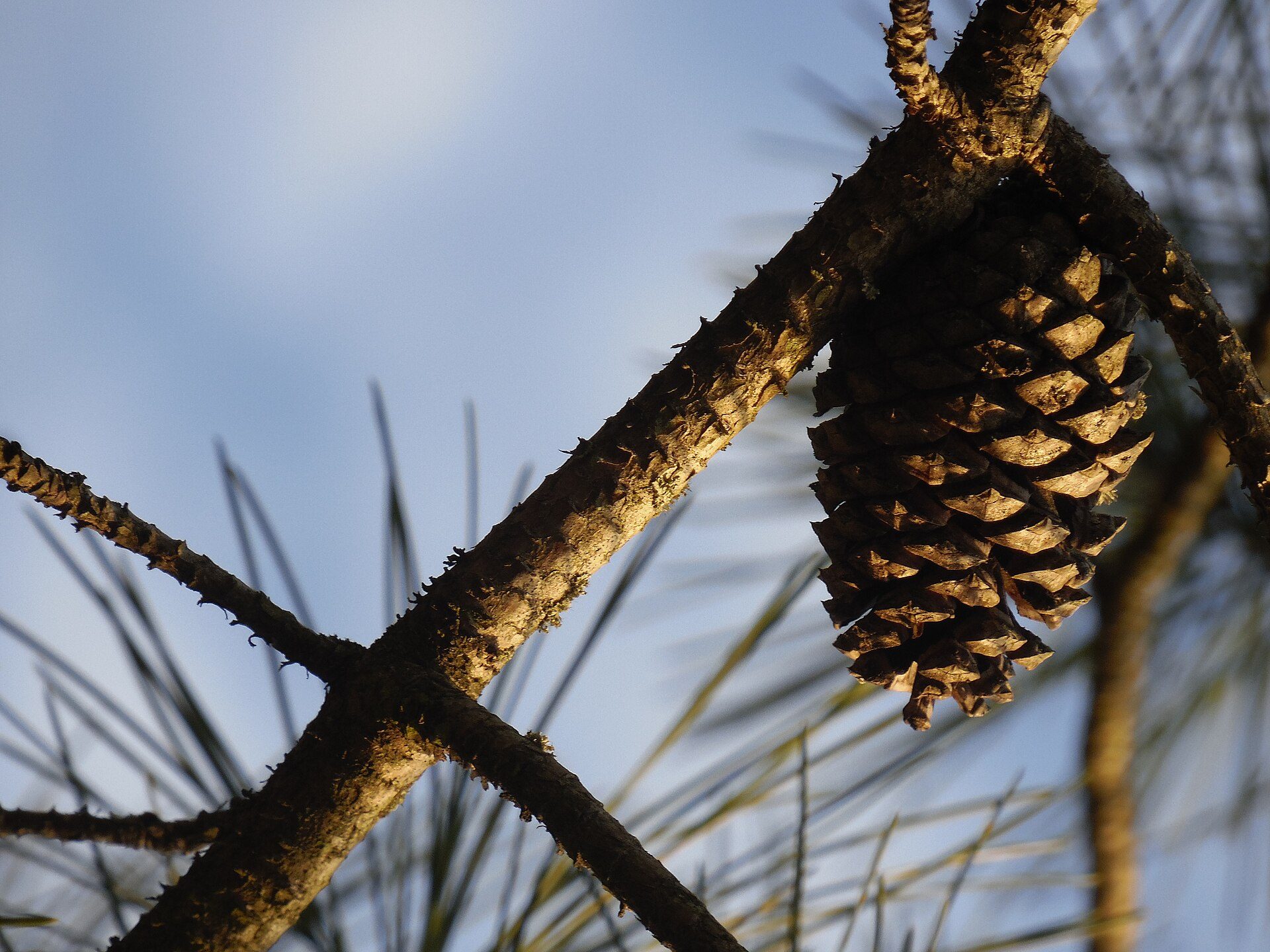
The pine cone: a material that opens and closes without energy
A pine cone opens when dry and closes when damp, using no cells, no energy and no moving parts. How the bilayer mechanism works, why the microfibril angle…
-
Molecular Velcro: how the wood cell wall yields without weakening
A tree bends far past the point where an engineering material would be permanently damaged, then stands up again. The explanation is a stick–slip mechanism inside the cell…
Browse by area: Sustainability & Circularity · Policy & Regulation · Research & Publications